Hey friends. Christianity Today released its 2023 book awards today. Some really great stuff there. But I want to draw attention to the Theology (Popular) section, where Kent’s bookReading Theology Wiselywas a finalist! It truly is an exceptional book, one that Kent poured his heart into. Congratulations, Kent!!
Kent is one of the founding contributors of this blog. For more than a decade, he’s helped students at Huntington University learn to read theology wisely (as a former student, he does it well!). In Reading Theology Wisely, Kent gathers together the wisdom he’s gained from pouring himself into teaching theology in the classroom and other settings.
But it is not just a how to book, it is one meant to reorient the reader’s idea of what theology is. “Dear reader,” Kent begins, “I wrote this book so that when you read theology, you would come to see it as an activity of your Christian life–not separate from everything else you care about and do as a Christian.”
It’s a lovely little book, readable, and with outstanding illustrations by Chris Koelle, which enliven the experience of reading the book. If you haven’t gotten one already, pick up a copy today. You won’t regret it.
Again, congratulations, Kent. This is a well-earned confirmation of the work you’ve done. We’re proud of you!
Howdy all, Zen here. It’s been quiet around here, in part, because I transitioned into a Ph.D. program down at Baylor University (sic’ em, Bears!).
Part of my work over the last several months has included helping the Religion Department and Baylor University Press start up a new podcast. It will feature folks from the department, authors from the press, and, depending on the show, other guests that might help us have a good conversation. And I get the privilege of serving as the host. It’s good fun.
Anyhow, I thought I’d share the podcast with you all in case you’d be interested in listening. You can check it out using the player below or search “Currents in Religion” on Apple, Spotify, or Amazon Music. And follow us on Twitter at @cirbaylor!
In this episode, Zen speaks with Micheal O'Siadhail about his new collection of poetry, Desire, which is out now from Baylor University Press.
Micheal O’Siadhail is an award-winning Irish poet. He received the Irish American Cultural Institute prize for poetry in 1982; the Marten Toonder prize for Literature in 1998. And one of his other Baylor University Press books, The Five Quintets, received the Conference on Christianity and Literature’s 2019 book of the year award.
Listen to Micheal discuss Testament, another collection of poems, on a previous episode of Currents in Religion: https://podcasts.apple.com/us/podcast/micheal-osiadhail-on-faith-poetry-and-daring-to-love/id1648052085?i=1000590394430
Learn more about the Desire here: https://www.baylorpress.com/9781481320061/desire/
As Easter is fast approaching, here’s a post from last year that, I think, is still quite relevant. From the post:
This year, as churches utilize livestreams and other digital options, Easter worship will be more public than any time in recent history. Preachers may have an opportunity to speak to people who otherwise would never hear them. Will you keep those people, who are likely desperate for the good news of the gospel, waiting in the tomb all morning? Or will you rush them out of the tomb in joy, taking them by the hand and leading them on a search for the living Lord? Will you make them turn over yet another stone in the grave or will you tell them with boldness that God raises life from the dead?
Of late, I’ve loved to remember the stories of the woman/women at the tomb on Easter morning. I love the disparities between the stories which, among other more important things, give rise to the possibility of picking a favorite version. All things considered, Luke is my favorite. And it is so almost entirely because of the question asked of the women by the two glowing men: “Why do you look for the living among the dead?”
For some readers, however, the disparities generate concerns about the historical accuracy, authenticity, and inerrancy of the gospels. Can we trust a story if we aren’t confident about every detail?
Ellen Davis suggests that an interpretation of Scripture should be judged by its beauty. She writes,
Interpretations of scripture are not just right or wrong, although at times such categories are useful and necessary. A more adequate way of judging our readings might be the way we judge works of art—according to the standards of beauty. To what extent do our readings reveal the intricacy, the wondrous quality of what the biblical writers call ma‘asei Adonai, “the works of the LORD”?
Ellen Davis, Christian Century, “Beyond Criticism”
I think this is an important insight. “Right” and “wrong” are “useful and necessary” at times but they are insufficient for grappling with the biblical writings. This is something, I think, that great artists who’ve taken up the task of interpreting the Bible with brush or chisel have always intuited more ably than those of us who write our interpretations. Someone like me, who works mostly in prose, is tempted toward explanation, toward epistemic concerns. Artists working in images and other mediums are not so concerned with what way of understanding the story is right or wrong but how the story itself might lay hold of us. What detail, what peculiarity, what character might prove gripping when seen in a fresh light? The artist reads a story with a different guiding question than the common biblical interpreter, namely, “What about this story is so beautiful that it must be rendered?”
Hi all: like many of you I was glued to the screen yesterday afternoon. I was not sure what to do following the events that unfolded throughout the day. More sobering today, we now know four people died and fourteen police were injured. Beyond death and injury, people are unsettled for all kinds of reasons. I thought about releasing some kind of “pastoral wisdom” on the matter today but determined I might do better just to help people pray–not to avoid the pain and problems at hand, but to engage them more deeply. Prayer strengthens our spirit to engage the world with more love and wisdom.
So, here’s a common prayer you might want to use this evening (or at another time). The prayer is based loosely on Evening Prayer from The Book of Common Prayer (1979). Please contact me if I can offer you any pastoral care or support in this solemn moment of history.
Swamped with work, and pulled in every direction! Pastoring during this season is wild. I have 20+ books to review next year and I have several blogs sitting in my “ideas” folder. Here’s to hoping for time to knock that out come January, as the winter slows things down a bit at church and home.
In the meantime, here’s a good second-week-of-Advent tune. My wife’s voice is just perfect for it. And the lyrics are a balm to weary souls. We’re covering Josh Garrel’s version of this old hymn. (If nothing else, even if you don’t listen to the song, maybe my still screen face will give you a laugh.) Bless you!
This interview was originally my church’s time of biblical reflection and proclamation during an all-digital service. (Nov. 8, 2020: full service is available here. There is an echo on the pre-recorded videos, however, so you’ll want to watch the interview video below.) We discuss the psalms in general, Psalm 146 specifically, and how Jesus encounters us through that psalm. Enjoy!
Jason Byassee currently teaches at Vancouver School of Theology. He is an ordained Methodist minister and has published numerous books, including a commentary on the final fifty psalms.
Because they (and, let’s be honest, all of us!) need all the prayers we can get right now.
O Sovereign Lord, we pray for politicians the world over. The ones we adore and the ones we despise, all of whom will answer to You. We pray especially for those who dishonor You by ruling dishonestly, harmfully, and unjustly. Guard the weak and the needy from their tyranny. And teach us, even in our sinfulness, to love them enough to celebrate whatever good they do and to call them to account for the wrong. Most of all, Lord, we pray that you would captivate their hearts and minds that their rule may echo the justice, mercy, and humility of Your own rule, revealed in Christ our Lord. In His name, we pray. Amen.
If you want to Tweet it…
(1/3) O Sovereign Lord, we pray for politicians the world over. The ones we adore and the ones we despise, all of whom will answer to You. We pray especially for those who dishonor You by ruling dishonestly, harmfully, and unjustly.
Howdy, friends. As usual in 2020, I am making too little time to write. What can you expect in a year with a global pandemic and a newborn, not to mention the wild socio-political events?
One beautiful aspect of this year has been my own personal discovery of ancient Christian practices, prayers, and songs, through which Christ has comforted me endlessly. The Phos Hilaron prayer is a wonderful example. Rev. Clarke French, an Episcopal priest in North Carolina, was kind enough to walk me through the Book of Common Prayer’s evening prayer liturgy. He pointed out the Phos Hilaron as an especially beloved prayer. I understand why.
When I heard Owain Park’s composition sang at Ely Cathedral of it, I was struck with solemn joy. A prayer for our season, it is! My church will use it for our All Hallows’ Eve service (digitally streamed on our YouTube channel), as well as in our evening prayers throughout Advent. Since I intend to use it often, I asked my friend Alyssa to help make it familiar to our congregation. We created the video below. Hope you enjoy it!
For the run-up to Election Day and in the season afterward, I am sharing this challenge with you all. (I created it, first and foremost, for my own congregation but I hope it might also prove fruitful to TF readers.) The challenge is self-explanatory. I offer some additional thoughts for each prayer below. May the Lord transform you as you and your communities dwell with Him in prayer.
As an undergraduate at a low-church evangelical school, singing psalms was not on my radar. So, when Sons of Korah showed up to chapel and played an array of psaPlms that they had set to music, I was pleasantly surprised. At the time, I thought it was a neat, if quirky, way to honor the Bible’s role in our worship. Only later did I discover the church’s long history of praying the psalter through song and chant.
Nowadays, there’s a revival happening. The Psalms are being sung everywhere. And, thank goodness, there is a swell of new literature happening on the Psalms, too. In my mind, this may well be the most important development in American liturgical and congregational life that is currently happening. So, I thought I’d put together a list of resources for people growing interested in the Psalms, and specifically in singing the Psalms together.
Poor Bishop Hooper’s “Psalm 1”
Singing Resources: Artists & Publications to Help You Sing the Psalms
Poor Bishop Hooper: EveryPsalm – Jesse and Leah Roberts release one psalm set to music a week, intending to set every Psalm to music. They’re almost to Psalm 40 at the time of writing this blog. The songs I’ve listened to are outstanding, especially for reflective purposes. However, most of them would be singable in a congregational setting, if with a few slight adjustments. I listen to their Psalm 1 rendition regularly at the beginning of my day, getting the line “like trees by the river / with leaves that never wither” stuck in my head.
Sandra McCracken – Sandra McCracken, a Nashville-based songwriter, worked up a Psalms album some years ago. It is stunning. My church sings a couple songs from it. The songs challenge the congregation musically but once familiar they are incredibly catchy and singable. She also did a really nice conversation with Ellen Davis which appeared on the Road to Now Theology podcast. Dr. Davis is currently writing a book on the Psalms (with Makoto Fujimura during art for it!), so the conversation revolves around the Psalms, prayer, and music.
Wendell Kimbrough – Wendell Kimbrough has released a couple of albums fully made up of Psalms set to folksy, easy-to-sing songs. I cannot read or hear “O give thanks” without his melody dancing through my mind.
Seedbed Psalter – During Eastertide, my congregation used this incredibly accessible psalter to explore singing the psalms regularly. Julie and Timothy Tennent, of Asbury Seminary, set all of the Psalms into meters of familiar hymns. This makes it simple for congregants, who know songs like “Amazing Grace” or “Immortal, Invisible,” to begin singing the prayers of Scripture.
As for the burgeoning field of publications on the Psalms, I’m not even sure where to start. Jason Byassee offers reflections on five new books, each with their own unique contribution to the study of the psalter. I am also very eager for Ellen Davis and Makoto Fujimura’s book (though I’ve only come to know that it is underway because of Fujimura’s tweets). I imagine Jerome Creach’s book Discovering Psalms will be a gift to the church.
I still have much to learn but I am thankful that I do not have to learn on my own. After all, the Psalms are meant to be sang together.
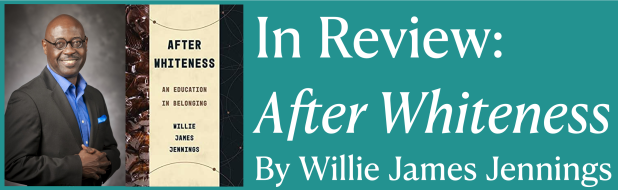
“There is nothing inherently good about gathering people together,” writes Willie James Jennings, a professor at Yale Divinity School, “but there is something inherently powerful.” His new book After Whiteness: An Education in Belonging names the distorted powers at work in Western theological education (and Western education more broadly). More than naming the distorted powers, he tries to describe a way, a vision, a hope for a theological education healed from this distortion.
Jennings has written a book the academy and the church need right now.
Hey there! I’ve had a handful of posts sitting neglected in the drafts folder, several of which are working out some of the questions I was wrestling with when I preached on Philippians 2:1-11 a week ago. I’m not ready to post them yet, but I did come upon some resources that seem like they might open up some ideas for fellow preachers taking up the epistle this Sunday.





 Theology Forum